
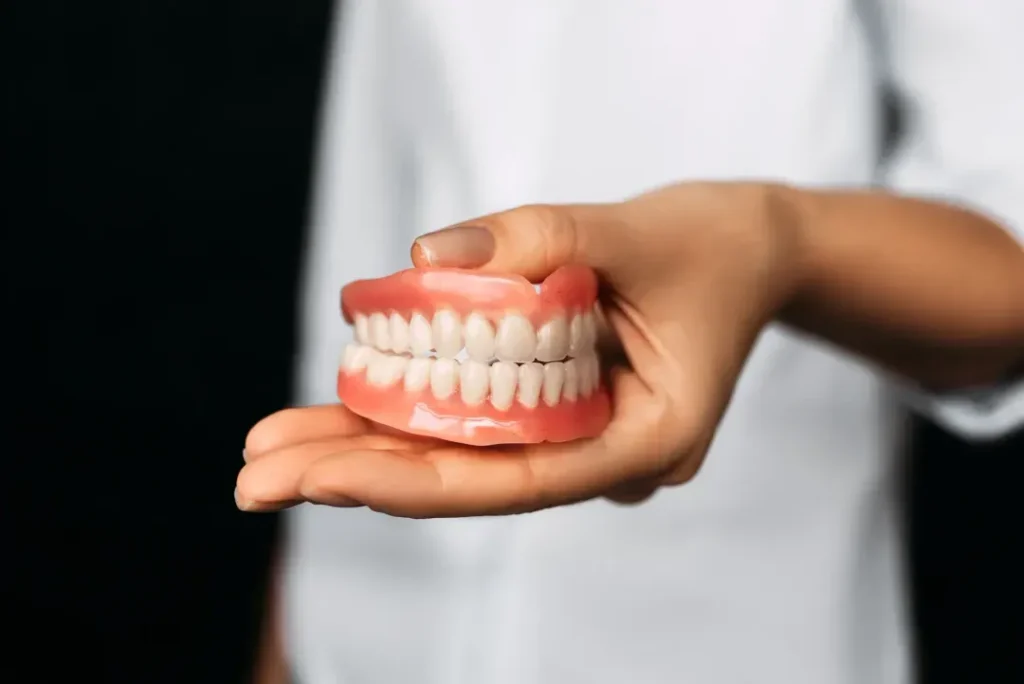
Which Dentures Do We Offer?
Partial dentures are removable and used when you still have some natural teeth remaining. They consist of replacement teeth attached to a gum-colored base and supported by a metal framework that clips onto your existing teeth. Partials fill gaps in your smile, prevent remaining teeth from shifting, and restore your ability to chew comfortably.
Full arch dentures replace all the teeth in one arch of your mouth, offering a solution for patients who have lost most or all their teeth in the upper or lower jaw. These dentures rest on your gums and are held in place by suction or denture adhesive. Modern full dentures look natural and restore your ability to eat, speak, and smile.
All-on-X dentures, also known as implant-supported dentures, restore an entire arch of missing teeth with maximum stability. Dr. Hardt or Dr. Cruz will place four to six dental implants using a surgical procedure and then anchor your custom dentures to them. This option eliminates the slipping and movement associated with traditional dentures, allowing you to eat your favorite foods and speak clearly without worry.
How Long Do Dentures Last?
How do I care for my dentures? Clean your dentures daily using a soft-bristled brush and denture cleaner, not regular toothpaste which can be abrasive. Rinse dentures after eating to remove food particles. When not wearing them, keep dentures moist in water or a denture soaking solution to prevent warping. Handle them carefully over a folded towel or basin of water to prevent damage if dropped. Continue to brush your gums, tongue, and any remaining natural teeth daily, and visit our office regularly for checkups and professional cleanings.
How to Care for Your Dentures
- Clean your dentures daily using a soft-bristled brush and non-abrasive denture cleaner.
- Remove your dentures at night to allow your gums and tissues to rest.
- Soak your dentures in water or a denture solution overnight.
- Handle your dentures with care to avoid damage or breakage.
Frequently Asked Questions
How long does it take to get used to wearing new dentures?
How long does it take to adjust to new dentures? Most patients require 2-4 weeks to adjust to new dentures, though the timeline varies individually. Initially, you may experience increased saliva production, minor soreness, and difficulty with certain foods or speech sounds. Your mouth muscles need time to learn how to hold and control the dentures effectively. We recommend starting with soft foods, practicing speaking aloud, and gradually introducing more challenging foods. If persistent sore spots develop, contact our office for adjustments rather than trying to tough it out.
Will dentures affect my ability to speak clearly?
Will dentures affect my speech? Initially, dentures may cause slight speech changes, particularly with words containing “s” and “f” sounds. This is completely normal and temporary. Your tongue and mouth muscles need time to adapt to the new appliance. Reading aloud, practicing problem words, and speaking slowly at first can help accelerate the adjustment process. Most patients regain normal speech patterns within a few weeks. If speech issues persist beyond the initial adjustment period, we can evaluate the fit and make necessary modifications.
Can I sleep with my dentures in place?
Should I sleep with my dentures in? We recommend removing your dentures at night to allow your gums and supporting tissues to rest and recover from the day’s pressure. This rest period promotes better oral health and helps prevent tissue irritation. Sleeping without dentures also allows your saliva to naturally cleanse your mouth and maintain healthy pH levels. However, some patients with All-on-X implant-supported dentures may have different recommendations based on their specific treatment plan.
What foods should I avoid with traditional dentures?
What foods should I avoid with dentures? Sticky foods like caramel and gum can dislodge dentures, while hard foods such as nuts, popcorn kernels, and ice can damage the denture material or cause discomfort. Foods that require significant biting force, like corn on the cob or whole apples, should be cut into smaller pieces. Very hot foods can warp denture materials. Seeded foods like strawberries may get trapped under dentures. With practice and proper technique, most foods can still be enjoyed with some modifications to preparation and eating methods.
How often do dentures need to be replaced or adjusted?
How do I care for my dentures? Clean your dentures daily using a soft-bristled brush and denture cleaner, not regular toothpaste which can be abrasive. Rinse dentures after eating to remove food particles. When not wearing them, keep dentures moist in water or a denture soaking solution to prevent warping. Handle them carefully over a folded towel or basin of water to prevent damage if dropped. Continue to brush your gums, tongue, and any remaining natural teeth daily, and visit our office regularly for checkups and professional cleanings.