What is a Root Canal?
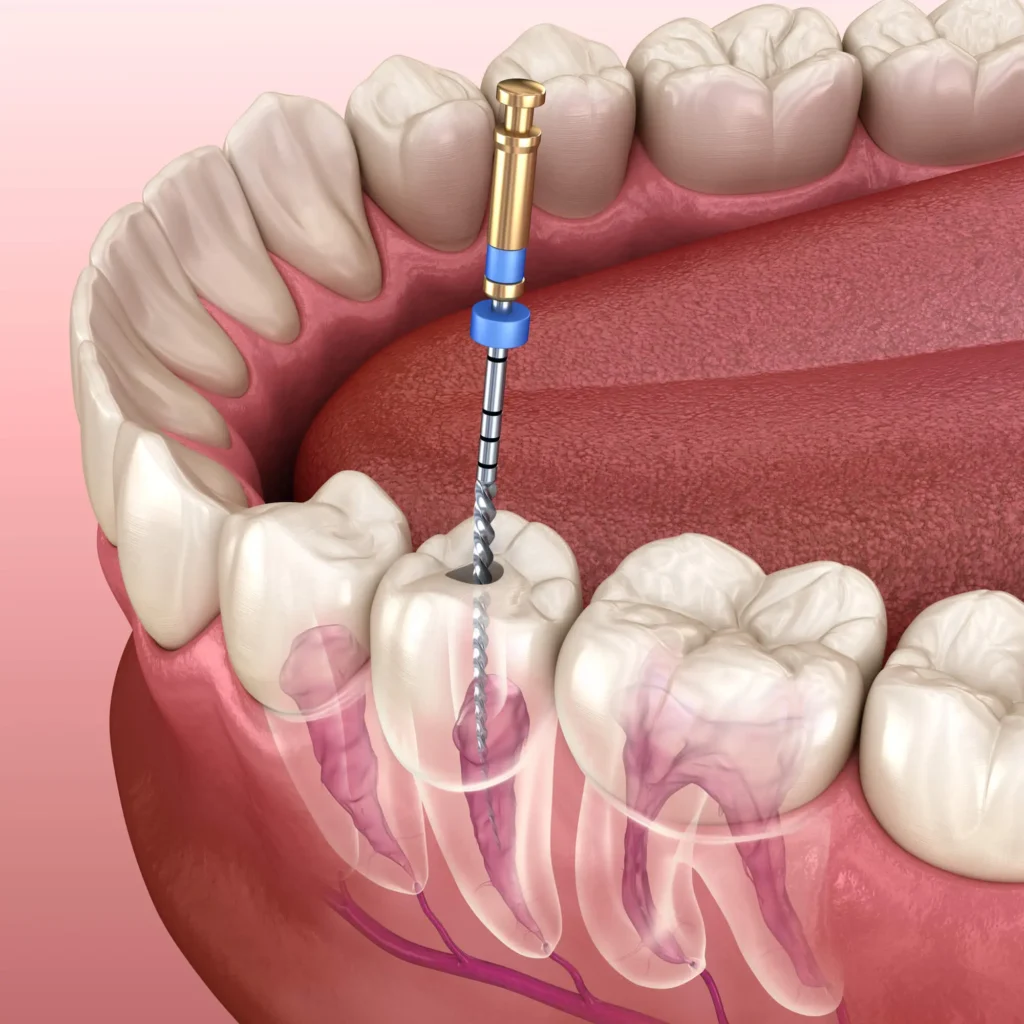
The pulp sits at the center of your tooth, surrounded by enamel and dentin, and contains the nerves, blood vessels, and connective tissue that nourished the tooth as it formed. When bacteria reach the pulp through a deep cavity, a crack, or a hard hit to the mouth, infection sets in and the nerve begins to die. An abscessed tooth follows when that infection builds pressure and pus inside the bone surrounding the root, and at that point the tooth needs treatment quickly to be saved.
Root canal therapy removes the infected pulp while keeping the rest of the tooth intact. Dr. Hardt or Dr. Cruz numbs the tooth and the surrounding gum with local anesthesia, opens a small access point in the crown of the tooth, and uses fine instruments to clean out the pulp chamber and the canals that run down through the roots. Once everything is clean, the canals are shaped, disinfected, and filled with a biocompatible material called gutta-percha, and the access opening is sealed. Most patients return within a few weeks for a dental crown to protect the tooth long-term.
Saving your natural tooth matters more than most patients realize. Your roots stimulate the bone of the jaw, the adjacent teeth stay where they are supposed to be, and your bite stays balanced. If a tooth is lost, restoring the gap means moving to a dental bridge or a dental implant, both of which add time and cost compared to keeping the tooth you already have.
Numb & Isolate
Local anesthesia goes in first, and a small barrier keeps the tooth dry and clean during treatment.
Access the Pulp
A small opening through the crown of the tooth gives Dr. Hardt or Dr. Cruz a clear path to the infected pulp.
Clean the Canals
Fine instruments remove infected pulp from each canal, and the inside of the tooth is disinfected.
Fill & Seal
Gutta-percha fills the cleaned canals and a temporary or permanent seal closes the access opening.
Crown the Tooth
A dental crown placed within a few weeks protects the tooth and restores full chewing strength.
When Do You Need a Root Canal?
- Severe toothache
- Sensitivity to hot or cold
- Swelling in the gums
- A pimple on the gums
- A tooth abscess

Does a Root Canal Hurt?
The phrase “root canal” carries a heavy reputation, but the procedure itself usually feels a lot like a routine filling. Modern instruments are quieter and faster, and local anesthesia numbs the tooth and the surrounding tissue thoroughly before any work begins. What patients are remembering when they think a root canal hurts is the infection that brought them in, not the treatment that cleared it out.
Mild tenderness around the treated tooth for a few days is normal, and most patients manage it with over-the-counter ibuprofen and a softer diet. The vast majority are back to normal eating and routine within a day or two. If pain gets worse instead of better after the first few days, or if the area swells, give us a call so we can take a look at an emergency appointment.
Mild Tenderness
Soreness around the tooth eases with over-the-counter ibuprofen and softer foods.
Back to Normal Eating
The original pain is gone and most patients return to normal meals and routine.
Permanent Crown
A dental crown is placed to protect the tooth and restore full chewing strength.
Routine Check
A fit and X-ray check at your normal visit confirms the treated tooth is healing well.
Lifetime With Care
A properly treated and crowned tooth can last as long as the natural teeth around it.
How Do I Care for My Tooth After a Root Canal?
- Attend follow-up appointments for proper healing and monitoring.
- Be gentle when brushing and flossing around the treated tooth.
- Avoid extremely hot or cold foods to prevent sensitivity.
- Eat a balanced diet rich in fruits, vegetables, and calcium.
- Use fluoridated mouthwash or toothpaste to strengthen enamel.
- Consider a mouthguard if you grind or clench your teeth.
- Stay hydrated with plenty of water for natural tooth protection.
Frequently Asked Questions
How do I know if I need a root canal treatment?
How do I know if I need a root canal?+
A few signs point clearly to an infected pulp: a severe toothache when you bite down or apply pressure, prolonged sensitivity to hot or cold that lingers after the source is gone, tender or swollen gums near a specific tooth, a persistent bump or pimple on the gums, or a tooth that has darkened compared to its neighbors. A tooth abscess is a more urgent version of the same problem. If any of these show up, seeing Dr. Hardt or Dr. Cruz quickly gives you the best chance of saving the tooth.
Do I need a crown after root canal therapy?+
In almost every case, yes. A treated tooth has had its pulp and blood supply removed, which leaves the remaining structure more brittle than a healthy tooth. A dental crown placed within a few weeks restores the strength of the tooth, protects it from new bacteria, and gives you back full chewing force. Without a crown, the tooth is much more likely to crack or reinfect, which would mean an extraction and a replacement option like a bridge, denture, or implant.
Does the procedure itself hurt?+
For most patients the procedure feels close to a routine filling. Local anesthesia fully numbs the tooth and the gum around it before any instruments touch it, and modern tools are quieter and faster than what most people picture. The pain people remember about root canals is the pain that brought them in. Once the infected pulp is out, that pain goes with it.
How long does the treatment take?+
Most root canals are completed in one to two visits. A straightforward front tooth with a single canal can often be finished in a single appointment of about 60 to 90 minutes. Back molars have more canals and can take a second visit. The dental crown is placed a few weeks later, once the tooth has settled and we have confirmed the infection is cleared.
What happens if I delay or skip the root canal?+
An untreated pulp infection does not heal on its own. The bacteria continue to spread into the bone around the root, the pain typically worsens, and the tooth often becomes unsaveable, which means extraction. After extraction, restoring the gap means moving to a bridge, implant, or denture, all of which involve more time and cost than the root canal would have. Treating the tooth early keeps the natural tooth in place and keeps your options simpler.
Will my insurance cover root canal therapy?+
Many dental insurance plans cover a portion of root canal therapy because it is considered a medically necessary procedure to save the tooth. Coverage varies plan to plan, and we will check your specific benefits during your consultation so you know what to expect out of pocket. CareCredit financing is available so the cost can be spread out into monthly payments that work for your budget.
Do I need a crown after root canal therapy?
Do I need a crown after root canal therapy? Yes, a dental crown is typically recommended after treatment to protect your tooth from bacteria, plaque, and future damage. Root canal therapy removes the pulp that provided nutrients to the tooth, making the remaining structure more brittle. A crown restores strength, function, and appearance while providing long-term protection. Without a crown, the treated tooth faces higher risk of breaking or becoming reinfected, potentially requiring extraction and more complex replacement procedures like dentures or implants.