What Are Full-Mouth Dental Implants?
Full-mouth dental implants represent the gold standard in tooth replacement technology. Unlike traditional removable dentures that rest on your gums, implants are titanium posts surgically positioned into your jawbone to serve as secure roots for your new teeth. According to the CDC, 1 in 10 adults between 65 and 74, and 1 in 5 over 75, have lost all their teeth. For these patients, full-mouth dental implants often require just 4-6 implants per arch rather than an individual implant for each missing tooth.
The advantages of this approach include:
- Permanent, non-removable teeth that function like natural teeth
- Preservation of jawbone density and facial structure
- Improved chewing ability and speech clarity
- No adhesives, removal for cleaning, or movement during use
- Long-lasting solution that can support you for decades with proper care

Types of Full-Mouth Implant Solutions
When considering full-mouth dental implants in Porterville, it’s essential to understand the various options available to restore your smile. At Richard Hardt’s Live Oak Dental Group, we offer several approaches tailored to your specific needs, including:
All-on-4 or All-on-6 Implants
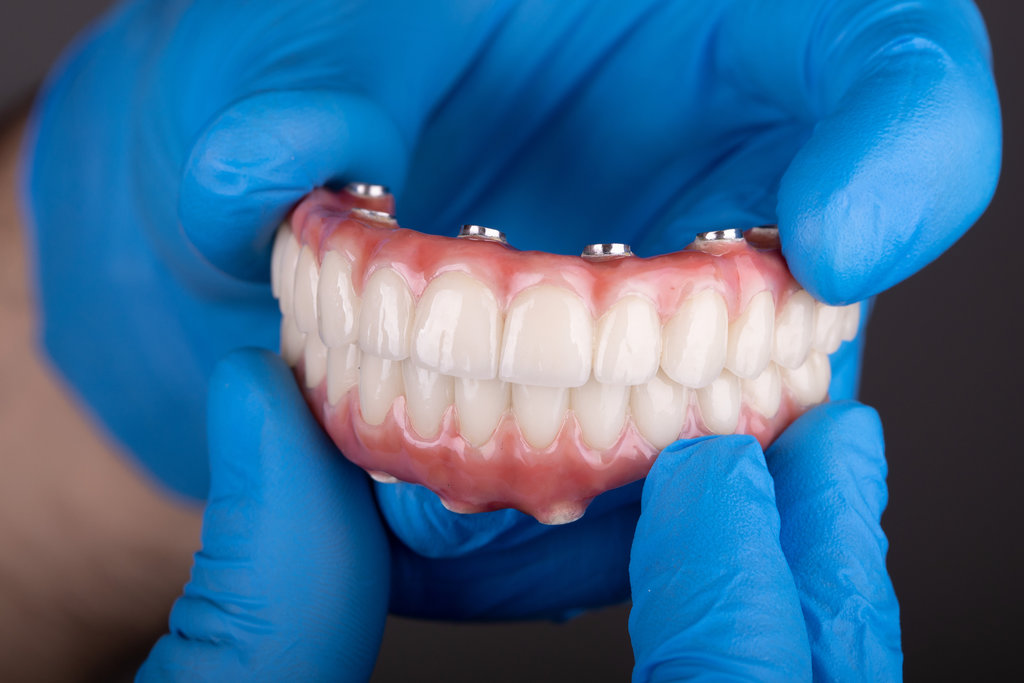
This innovative technique uses four to six strategically placed implants to support an entire arch of teeth. The implants are angled to maximize contact with existing bone, often minimizing or eliminating the need for bone grafting procedures. In many cases, this approach allows for immediate function, meaning you can receive temporary teeth the same day your implants are placed.
Implant-Supported Bridges
For patients missing segments of teeth, implant-supported bridges provide a fixed solution without altering adjacent healthy teeth. Unlike traditional bridges that require filing down neighboring teeth, implant bridges are anchored directly to the jawbone through multiple implants.
Implant-Retained Overdentures
This option mixes the stability of implants with the comprehensive coverage of dentures. The overdenture snaps onto attachment points connected to your implants, providing significantly improved retention compared to traditional dentures while remaining removable for cleaning.
Our Full-Mouth Implant Process
Your road to a complete smile begins with a comprehensive consultation. We’ll assess your oral health, discuss your goals and preferences, and determine if you’re a candidate for full-mouth implants. Our advanced technology allows us to draft detailed, three-dimensional images of your jaw structure for precise implant planning.
The full-mouth implant procedure typically follows these steps:
- 1. Thorough examination and personalized treatment planning
- 2. Preparatory procedures, if needed, like extractions or bone grafting (This service is referred out to Dr. Timothy Bunnell at Central Valley Implants)
- 3. Surgical placement of dental implants
- 4. A healing period where implants integrate with your jawbone
- 5. Attachment of custom-crafted, natural-looking replacement teeth
Recovery and Aftercare
The recovery process for full-mouth dental implants varies from patient to patient but typically follows a predictable timeline. After implant placement, you may experience some swelling and discomfort, which can be controlled with prescribed or over-the-counter pain medications.
During the initial healing phase (typically 1-2 weeks), you’ll follow a soft diet to allow your surgical sites to heal correctly. Over the next 3-6 months, your implants will undergo osseointegration, where they fuse with your jawbone to create a stable foundation for your new teeth.
Once your implants have fully integrated, your permanent restoration will be attached. Our team will provide in-depth instructions on caring for your new teeth, which include:
- Regular brushing and flossing around your implants
- Using recommended interdental brushes to clean hard-to-reach areas
- Attending regular maintenance appointments
- Avoiding tobacco products that can compromise implant success
With proper care, your dental implants can last for decades, providing a permanent solution to tooth loss.
Why Choose Richard Hardt’s Live Oak Dental Group for Your Full-Mouth Dental Implants?
When it comes to full-mouth dental implant restoration, experience matters. Dr. Hardt has dedicated his career to providing exceptional dental care, honing his skills first under his father’s guidance in Lindsay, CA, and continuing to master advanced restorative techniques.
Our practice stands apart from other dental clinics in the following areas:
- We perform the entire implant procedure in our office, from planning to placement to final restoration
- Our team uses cutting-edge technology for precise, predictable results
- We provide sedation options to ensure your comfort and well-being throughout treatment
- We work with you to create financing solutions that fit your budget
Another valued team member, Dr. Irene Cruz, brings her exceptional skills and devotion to patient care to every implant procedure. With her excellence in academic achievement and fluency in Spanish, she ensures all patients receive comprehensive care tailored to their needs.
Ready to Transform Your Smile at Richard Hardt’s Live Oak Dental Group?
Living with missing teeth doesn’t have to be your reality. Full-mouth dental implants offer a permanent solution that dramatically improves your quality of life. At Richard Hardt’s Live Oak Dental Group, we specialize in making high-quality restorations that blend seamlessly with your natural teeth. With cutting-edge technology and a heartwarming approach, Dr. Hardt and his team, including Dr. Cruz and Dr. Lewis, are committed to helping you achieve optimal oral health and a beautiful smile you’ll be proud to share.
Contact our Porterville office today at (559) 784-6523 or complete our contact form to schedule your consultation. Together, we’ll develop a treatment plan that addresses your unique needs and helps you reclaim the joy of a complete, functional smile.
Frequently asked questions
Can I get full-mouth implants if I currently wear dentures or have no teeth at all?
Yes, both denture wearers and patients with no teeth are often excellent candidates for full-mouth implants. In fact, many patients choose implants specifically to eliminate the problems they’ve experienced with traditional dentures like slipping, sore spots, and eating limitations. If you currently wear dentures, we can often use them as templates for your new implant-supported teeth. For patients with no teeth, we’ll design a completely new smile based on your facial proportions and preferences. The implant procedure is often easier when no extractions are needed.
How do I eat during the healing period, and when can I return to normal foods?
During the first 1-2 weeks, you’ll need to stick to soft foods like soups, smoothies, mashed potatoes, and yogurt to allow surgical sites to heal. If you receive immediate temporary teeth, they’re designed for light function only – avoid hard, sticky, or chewy foods during the 3-6 month integration period. Gradually introduce slightly firmer foods as healing progresses and comfort allows. Once your permanent restoration is placed and fully adjusted, you can typically return to eating most of your favorite foods, though extremely hard items like ice or hard candies should still be avoided to protect your investment.
Will my facial appearance change after getting full-mouth implants?
Full-mouth implants typically improve facial appearance by restoring proper support to your lips and cheeks, which may have collapsed due to bone loss from missing teeth. The implants help preserve remaining bone structure and can actually restore a more youthful facial profile. We carefully design your new teeth to complement your facial features and may even improve your smile compared to your original teeth. Some patients notice their speech becomes clearer and their confidence increases significantly. The changes are generally very positive and natural-looking.
What happens if one of my full-mouth implants fails years later?
Individual implant failure in a full-mouth restoration is relatively rare but can sometimes be managed without replacing the entire restoration. With All-on-4 systems, if one implant fails, it may be possible to place an additional implant to support the existing prosthesis. With individual implant crowns, a single failed implant can usually be replaced independently. The success of any repair depends on factors like remaining bone, the condition of other implants, and the original design. Regular maintenance visits help us monitor all implants and address any concerns before they become major problems.