

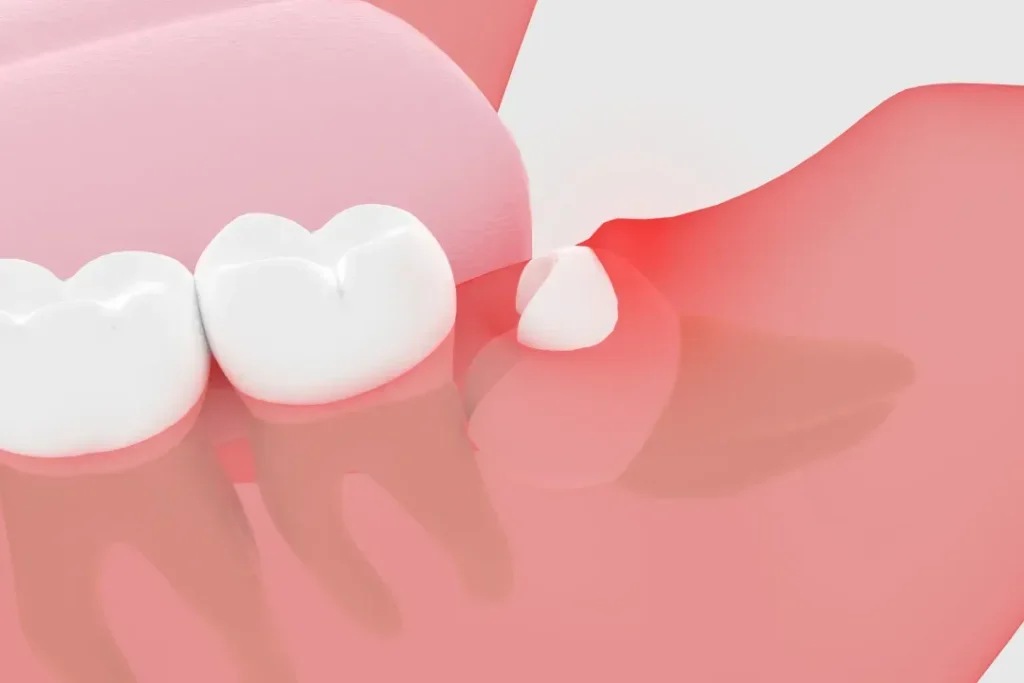
Problems Caused by Wisdom Teeth
Wisdom teeth can become trapped beneath the gum line, leading to pain, swelling, and infection.
Lack of space in the jaw causes wisdom teeth to push against adjacent teeth, which result in misalignment or crowding.
Partially erupted wisdom teeth can create pockets where bacteria accumulates. In this case, you may experience a type of infection known as pericoronitis.
Wisdom teeth can push against nearby teeth, which might harm them or make their roots weaken and wear away.

When Should Wisdom Teeth Be Removed?
- Impacted wisdom teeth causing pain or discomfort
- Signs of infection or inflammation around wisdom teeth
- Damage to adjacent teeth
- Evidence of cysts or tumors
- As a way to prevent future problems
How are Wisdom Teeth Extracted?
First, our doctors will administer anesthesia and sedation to make sure you don’t feel pain or discomfort during the procedure. Then, they will make a small incision in the gum tissue to reach the impacted tooth. Using specialized tools, they will gently remove the tooth and close the incision with dissolvable stitches.
After a few days, you will need to schedule a follow-up visit so Dr. Hardt and Dr. Cruz can check on your progress and see if the area has healed properly.
Is Wisdom Teeth Removal Painful?
While the procedure itself is not painful due to anesthesia, some discomfort and swelling are common afterward. Dr. Hardt and Dr. Cruz can recommend over-the-counter pain medication to help manage any post-operative discomfort.
Since we will use anesthesia and sedate you during the procedure, please have someone drive you home safely. If you experience any unusual symptoms or persistent pain days after the extraction, please contact us for an emergency visit.
How Long Does It Take to Recover from Wisdom Teeth Removal?
Recovery from wisdom teeth removal takes about a week, but full healing may take several weeks. If you want to recover fast, follow these instructions:
- Rest for the first 24 hours after the procedure
- Apply ice packs to reduce swelling
- Eat soft foods and avoid hard, crunchy foods
- Avoid strenuous physical activity
Frequently asked questions
At what age do wisdom teeth typically emerge, and is there an ideal time for removal?
Wisdom teeth usually begin to emerge between ages 17-25, though timing varies significantly among individuals. Some people’s wisdom teeth never fully erupt, while others may not develop wisdom teeth at all. The ideal time for removal is often during the late teens or early twenties when the roots are not fully formed, making extraction easier and recovery faster. However, removal may be necessary at any age if problems develop. Dr. Hardt and Dr. Cruz will monitor your wisdom teeth development during regular checkups and recommend the optimal timing if extraction becomes necessary.
Do all wisdom teeth need to be removed, or only the ones causing problems?
Not all wisdom teeth require removal. If your wisdom teeth have enough room to erupt properly, are correctly positioned, can be cleaned effectively, and aren’t causing problems with adjacent teeth, they may be kept. However, many people don’t have adequate space in their jaws for wisdom teeth, leading to impaction, crowding, or cleaning difficulties. Even if currently asymptomatic, wisdom teeth that are difficult to clean may cause problems later. Dr. Hardt will evaluate your specific situation, jaw size, tooth positioning, and oral hygiene access to determine whether removal is recommended.
What are the warning signs that my wisdom teeth might need to be removed?
Common warning signs include persistent pain or pressure in the back of your mouth, swelling or tenderness in the gums around wisdom teeth, difficulty opening your mouth fully, bad breath or unpleasant taste near the wisdom teeth area, crowding or shifting of your front teeth, and repeated infections around partially erupted wisdom teeth (pericoronitis). You might also notice jaw stiffness, headaches, or difficulty chewing on one side. If you experience any of these symptoms, schedule an evaluation to prevent more serious complications from developing.
Can I have multiple wisdom teeth removed at the same time?
Yes, it’s common and often recommended to remove multiple wisdom teeth during a single procedure, especially if they’re all problematic or likely to cause issues. Removing all four wisdom teeth at once means only one recovery period and eliminates the need for multiple appointments. However, the decision depends on factors like the complexity of extractions, your overall health, pain tolerance, and personal preferences. Some patients prefer to remove teeth on one side at a time to maintain some chewing function. Dr. Hardt will discuss the best approach based on your specific situation.
What complications should I watch for during wisdom tooth removal recovery?
Normal healing includes some swelling, discomfort, and minor bleeding for the first few days. However, contact our office immediately if you experience severe, worsening pain after day three (possible dry socket), excessive bleeding that doesn’t stop with gentle pressure, signs of infection like fever, pus, or foul odor, difficulty swallowing or breathing, numbness that doesn’t improve after several hours, or persistent nausea and vomiting. Following post-operative instructions carefully, including avoiding straws, smoking, and vigorous rinsing, significantly reduces complication risks and promotes proper healing.