
Getting a tooth extraction can leave your smile feeling incomplete, and you may wonder how long you’ll have to wait before restoring your confidence and your smile’s appearance with a dental implant. The answer depends on several factors, including the condition of your jawbone, your overall health, and the type of implant procedure that’s right for you.
At Richard Hardt, D.D.S., we understand that every patient’s situation is unique. Our team, led by Dr. Richard Hardt, Dr. Irene Cruz, and Dr. Jackson Lewis, is here to guide you through every step of the dental implant process. We work closely with a trusted oral surgeon right here in Porterville to ensure you receive expert care from evaluation to final restoration. With over 34 years of experience and a commitment to using the latest technology, we coordinate your treatment to help you achieve a healthy, confident smile.
Understanding the Timeline for Dental Implants
The timeline for receiving a dental implant after tooth extraction varies from patient to patient. In some cases, an implant can be placed immediately following extraction, while in others, a healing period of several months may be necessary. The primary factor that determines this timeline is the health of your jawbone and surrounding tissues.
When a tooth is extracted, the socket left behind needs time to heal. During this healing process, the bone begins to regenerate and stabilize, creating a strong foundation for the implant. If the extraction site is healthy and free from infection, we may recommend an immediate implant. However, if bone loss has occurred or if the extraction was complicated, a waiting period may be required to allow for proper healing and, in some cases, bone grafting.
Can You Get Immediate Dental Implants?
Immediate dental implants are placed during the same appointment as the tooth extraction. This approach is often ideal for patients who have good bone density and no signs of infection or gum disease. Research from the National Institutes of Health indicates that dental implant success rates exceed 95 percent when proper protocols are followed, making them one of the most reliable options for tooth replacement.
The benefits of immediate implants include fewer surgical procedures, shorter overall treatment time, and better preservation of the jawbone. However, not all patients are candidates for this approach. We will carefully evaluate your oral health, the condition of the extraction site, and your overall medical history to determine if immediate implant placement is right for you.
Who Can Get Early Dental Implants?
For patients who are not candidates for immediate implants, early placement may be an option. Early dental implants are typically placed two to three months after tooth extraction, once the soft tissue has healed but before significant bone resorption occurs. This approach allows the gum tissue to stabilize while still taking advantage of the existing bone structure.
Early implants strike a balance between immediate placement and the traditional delayed approach. They provide enough time for initial healing while minimizing the risk of bone loss that can occur when implants are delayed for too long.
When May Dental Implant Placement Get Delayed?
In cases where significant healing is required or bone grafting is necessary, delayed implants may be recommended. This approach typically involves waiting four to six months after tooth extraction before placing the implant. During this time, the extraction site fully heals, and any bone grafting procedures have the opportunity to integrate with the natural bone.
Delayed implants are often the safest option for patients with compromised bone density, existing infections, or complex extraction sites. While the extended timeline may seem inconvenient, it ensures that the implant has the best possible foundation for long-term success. We will monitor your healing progress and determine the optimal time for implant placement based on your individual needs.
Factors That Influence Dental Implant Timing
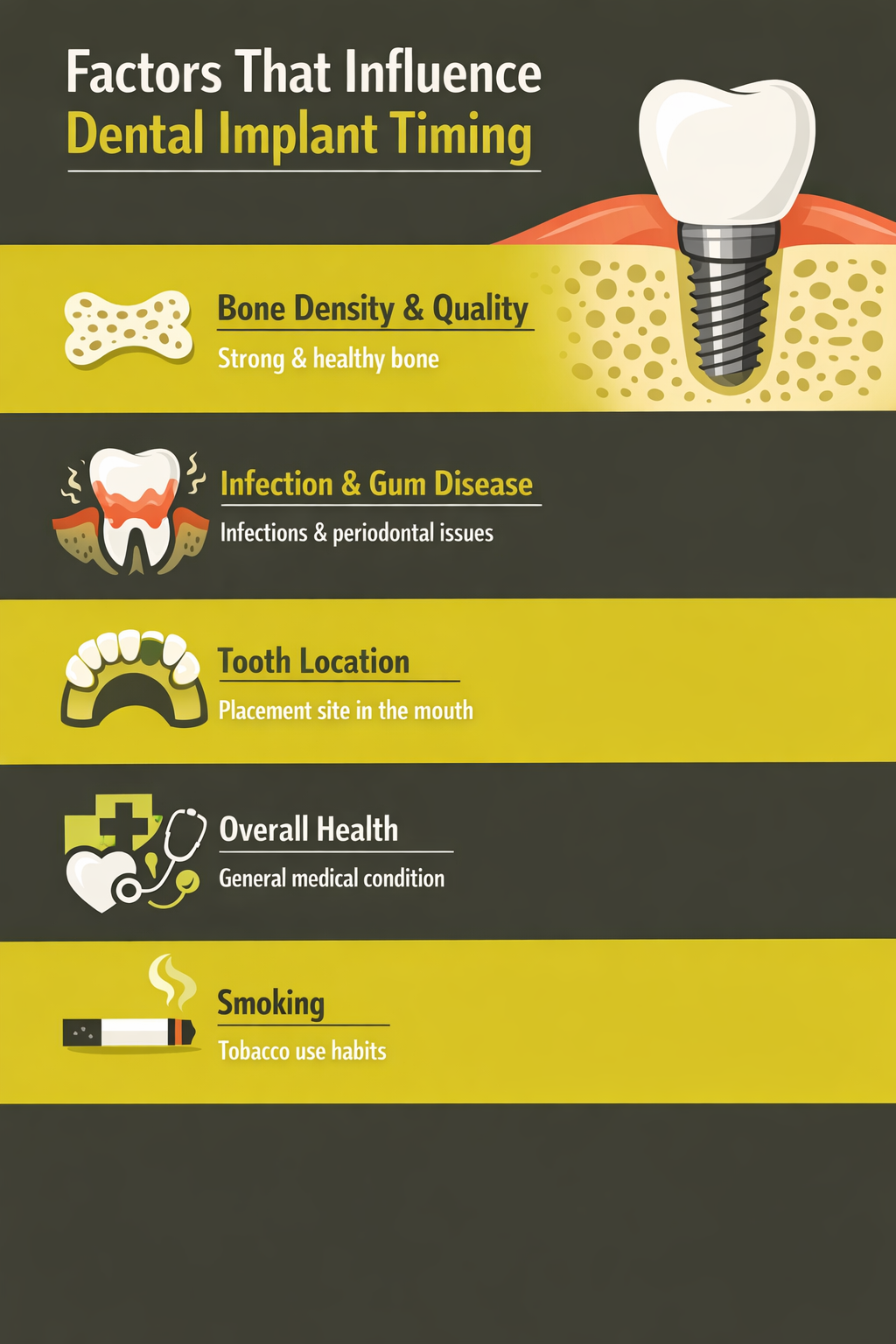
Several factors play a role in determining when you can receive a dental implant after tooth extraction, including the following:
- Bone density and quality: Healthy, dense bone is essential for successful implant placement and integration.
- Infection or gum disease: Any existing infection must be treated and resolved before an implant can be placed.
- Location of the missing tooth: Front teeth may heal differently than molars, affecting the timeline for implant placement.
- Overall health: Conditions such as diabetes or osteoporosis can impact healing and may require additional time before implant surgery.
- Smoking: Tobacco use can slow healing and increase the risk of implant failure, making it important to quit before undergoing the procedure.
We will conduct a thorough evaluation to assess these factors and create a personalized treatment plan that sets you up for success.
Restore Your Smile With Dental Implants at Richard Hardt’s Live Oak Dental Group
At Richard Hardt’s Live Oak Dental Group, we specialize in providing comprehensive dental care, including dental implants and restorative treatments. Dr. Hardt, Dr. Cruz, and Dr. Lewis work closely with each patient to determine the best approach for their unique situation. Whether you’re a candidate for immediate implants or need a bit more time to heal, our team is committed to helping you achieve a smile that looks and feels natural. We also offer flexible financing options through CareCredit to make your treatment more affordable.
If you’re ready to explore your options for dental implants, contact our office today to schedule a consultation. Let us help you take the first step toward restoring your smile and your confidence.
