You’ve been told implants could restore your smile, but you’re a smoker, and now you’re wondering if that changes everything. It’s a fair question, and more people are asking as dental implants become one of the most sought-after solutions for missing teeth.
Fortunately, smoking does not automatically disqualify you from getting dental implants, but it does mean there are important considerations to work through before moving forward. At Richard Hardt’s Live Oak Dental Group, our team takes the time to understand each patient’s full health picture, including lifestyle factors like tobacco use, so we can help you make an informed decision and pursue the best possible outcome.
How Smoking Affects the Implant Process
Dental implants rely on a process called osseointegration, which is when the titanium post fuses with the surrounding jawbone. This process takes time, and it requires good blood flow to the tissue and bone around the implant site. Smoking, however, significantly reduces that blood flow by constricting the vessels in your gums and jaw. Reduced circulation means less oxygen reaches the tissue, which slows healing considerably.
Additionally, nicotine suppresses the immune response, reducing the body’s ability to fight off bacteria around a new implant. This raises the risk of infection and a condition called peri-implantitis, an inflammation of the tissue surrounding the implant that can lead to bone loss over time. According to a 2024 systematic review published in the National Institutes of Health’s PubMed Central, 25 out of 33 studies found a significant link between smoking and increased implant failure rates, with higher daily cigarette use directly corresponding to a greater risk.
Early Failure vs. Long-Term Complications
Smoking creates two distinct windows of concern for implant patients. The first is early failure, which occurs when the implant doesn’t integrate with the bone at all. Smokers face a higher risk during this phase because healing is compromised right from the start.
The second concern is long-term complications. Even when an implant initially succeeds, smokers may experience greater marginal bone loss over time and a higher likelihood of developing peri-implantitis years down the road. Both issues can threaten the longevity of an otherwise successful restoration.
What Happens If You Quit or Reduce Smoking Before Surgery?
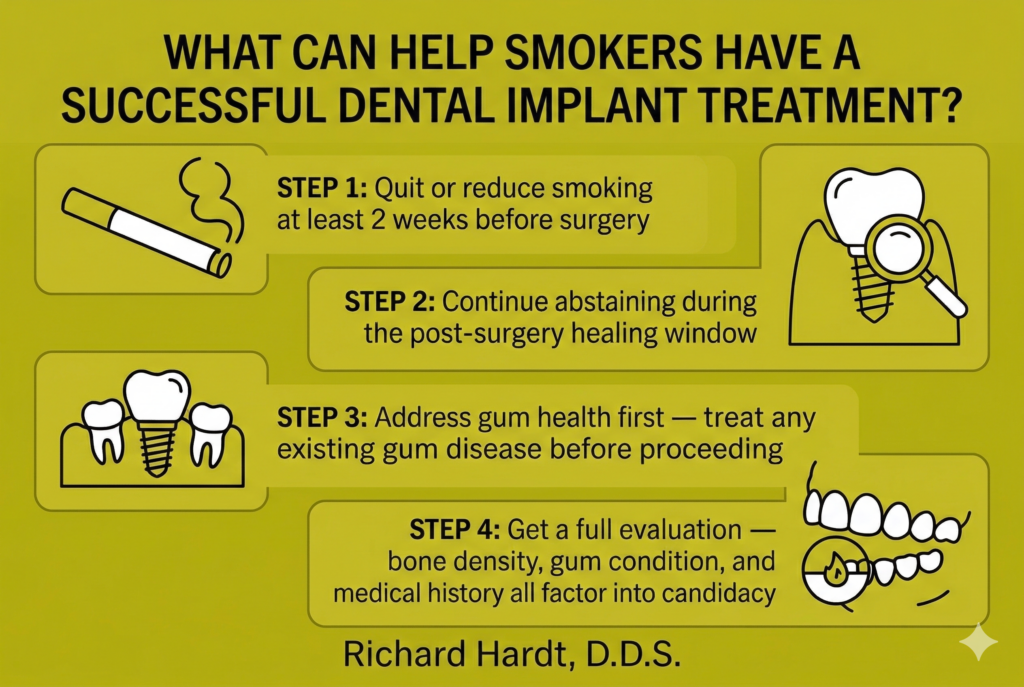
Quitting or significantly cutting back on cigarettes before and after implant surgery can reduce your risk of complications. Most dental professionals recommend stopping smoking at least two weeks before the procedure and continuing to abstain for a similar period after, at minimum. The healing window immediately following placement is the most critical period, and keeping tobacco out of the equation during this time gives the implant the best chance of integrating properly.
Ex-smokers tend to have implant success rates that trend closer to those of non-smokers than current smokers. If going completely tobacco-free isn’t realistic right now, reducing the number of cigarettes you smoke each day may still lower your risk, though it won’t eliminate it entirely. Our team will discuss what’s realistic for your situation and help you set expectations accordingly.
When May Smokers Still Be a Candidate for Dental Implants?
Smoking increases the risk of dental implant complications and failure, but it is not considered an absolute contraindication for treatment. Many smokers do successfully receive implants and maintain them well over time. What matters is a thorough evaluation of your overall oral health, bone density, gum condition, and medical history, as well as your smoking habits.
Candidates who are strong elsewhere, meaning they have sufficient bone volume, healthy gum tissue, and no untreated restorative dentistry concerns, may still move forward with implants after a candid conversation about the elevated risks. We will also look at whether there are other health factors that could compound those risks, and they’ll walk you through all of it before any decisions are made.
Heavier smokers, those who have existing gum disease, or have other underlying conditions that affect healing, may be advised to address those issues first. A thorough cleaning and gum evaluation is often an important first step, regardless of smoking status. Depending on how many teeth are missing and where, our team may also discuss whether single-tooth implants or full-mouth dental implants better align with your goals.
Reach Out to Richard Hardt’s Live Oak Dental Group to Learn If Dental Implants Are Right for You
If you smoke and have been putting off asking about implants because you assumed the answer would be no, we’d encourage you to have the conversation. The team at Richard Hardt’s Live Oak Dental Group believes informed patients make the best decisions, and that starts with getting honest answers to the questions that matter most to you. Dr. Richard “Rick” Hardt has over 34 years of dental experience and is joined by Dr. Irene Cruz and Dr. Jackson Lewis, a team that is committed to finding the right path forward for each patient.
We welcome patients from Porterville and the surrounding communities, and we’re happy to walk you through your options at a pace that feels comfortable. Whether implants are right for you now, or whether there’s some groundwork to lay first, we’ll help you figure that out together. To schedule your consultation, reach out to our office today.
