Missing teeth affects more than your appearance. They impact your ability to eat comfortably, speak clearly, and feel confident in social situations. When you’re ready to restore your smile, understanding the differences between dental implants and dentures helps you make an informed decision that fits your lifestyle and goals.
At Richard Hardt, D.D.S., we help patients in Porterville navigate their tooth-replacement options. Our experienced team offers comprehensive restorative dentistry solutions tailored to your unique needs. With over 34 years of dental experience, Dr. Hardt provides honest guidance to help you choose the restoration method that best serves your oral health and personal preferences.
Understanding Dental Implants
Dental implants are titanium posts surgically placed into your jawbone to serve as artificial tooth roots. These posts fuse with your bone through a process called osseointegration, creating a stable foundation for replacement teeth. Once healed, custom crowns, bridges, or dentures can be attached to implants, providing a permanent solution for missing teeth.
The implant process typically occurs in stages over several months. Your dentist first places the implant posts, then allows time for healing and bone integration. After the implants have fully bonded to your jawbone, the final restorations are attached.
Single implants can replace individual missing teeth, while multiple implants can support bridges or full-arch restorations. This versatility allows your dentist to customize your treatment based on how many teeth you need to replace and the condition of your jawbone.
How Traditional Dentures Work
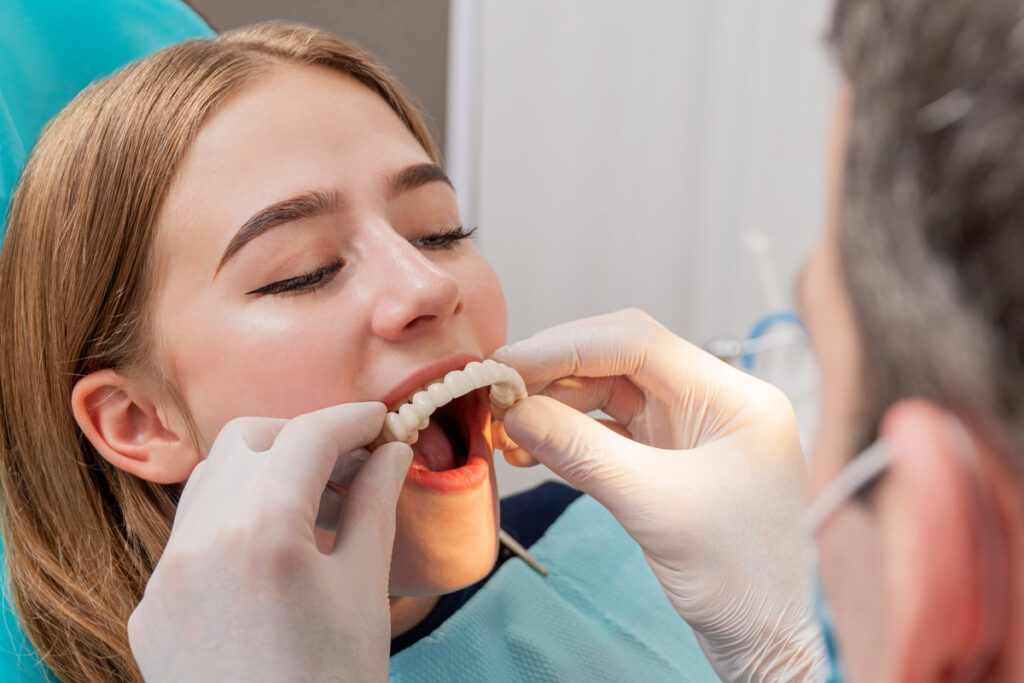
Traditional dentures are removable prosthetic devices that replace missing teeth and surrounding tissues. Complete dentures replace all teeth in the upper or lower arch, while partial dentures fill gaps created by several missing teeth. These appliances rest on your gums and rely on suction, adhesives, or clasps for stability.
Modern dentures are crafted from high-quality materials that look natural and function well. Your dentist takes precise impressions of your mouth to create dentures that fit your unique anatomy. The fabrication process involves multiple appointments to ensure proper fit, appearance, and comfort.
Dentures can benefit both your health and appearance by preventing your facial muscles from sagging and restoring eating and speaking function. Many people successfully wear dentures for years, though they require periodic adjustments as your mouth changes shape over time.
Comparing Stability and Function
Dental implants provide superior stability because they anchor directly into your jawbone. This secure foundation allows you to eat a wide range of foods without worrying about your teeth shifting or slipping. You can bite into apples, chew steak, and enjoy crunchy vegetables with the same confidence as natural teeth.
Traditional dentures rest on your gums and may move slightly during eating or speaking. While properly fitted dentures work well for many people, some foods remain challenging to eat. Sticky or very hard foods can dislodge dentures, and you may need to cut food into smaller pieces or avoid certain items altogether.
The bone stimulation provided by implants offers another functional advantage. When implant posts integrate with your jawbone, they stimulate the bone tissue just as natural tooth roots do. This stimulation helps preserve bone density and prevents the facial collapse that often occurs after tooth loss.
Maintenance and Longevity Considerations
Dental implants require the same care as natural teeth. You brush twice daily, floss regularly, and visit your dentist for routine checkups. With proper oral hygiene and professional maintenance, implants can last decades or even a lifetime. The crowns attached to implants may eventually need replacement, but the implant posts typically remain stable indefinitely.
Key maintenance requirements include:
- Daily cleaning: Brush implant-supported teeth twice daily and floss around each implant to prevent infection and maintain gum health.
- Regular checkups: Visit your dentist every six months for professional cleanings and examination of your implants and surrounding tissues.
- Bite adjustments: Periodic adjustments ensure even pressure distribution across all teeth, protecting both implants and natural teeth.
- Prompt attention to issues: Contact your dentist immediately if you notice looseness, discomfort, or other changes in your implant-supported teeth.
Traditional dentures need to be removed each night for cleaning and to give your gums time to rest. You soak them in a cleaning solution, brush them gently, and rinse thoroughly before reinsertion. Dentures typically last five to seven years before requiring replacement due to wear or changes in your mouth structure.
Cost and Treatment Timeline
Dental implants represent a larger upfront investment than traditional dentures. The surgical placement, healing time, and custom restorations all contribute to the cost. However, the longevity and minimal maintenance requirements of implants often make them more cost-effective over time.
The implant process takes several months from start to finish. After initial placement, you wait three to six months for osseointegration before receiving your final restorations. Some patients receive temporary teeth during healing, while others manage with their existing teeth or a temporary denture.
Traditional dentures offer a faster, more economical solution for tooth replacement. The entire process typically takes several weeks to a few months, and the lower cost makes dentures accessible to more patients.
Candidacy and Special Considerations
Good candidates for dental implants have adequate jawbone density, healthy gums, and overall good health. Certain medical conditions, like uncontrolled diabetes or active periodontal disease, may require treatment before implant placement. Your dentist evaluates your candidacy through examination, X-rays, and review of your medical history.
Patients with significant bone loss may need bone grafting before implant placement. This additional procedure adds time and cost to treatment but allows people who otherwise wouldn’t qualify for implants to receive them. Not everyone wants or can undergo the surgical procedures required for implants.
Traditional dentures work for nearly everyone, regardless of bone density or health status. They provide an excellent option for patients who cannot have surgery, prefer a non-invasive approach, or need an immediate solution for missing teeth. Some people eventually transition from dentures to implants as their situation changes.
Making Your Decision at Richard Hardt, D.D.S.
At Richard Hardt, D.D.S., we provide both dental implants and dentures to help you restore your smile with confidence. Dr. Hardt, Dr. Irene Cruz, and Dr. Jackson Lewis take the time to understand your priorities, thoroughly explain your options, and recommend solutions that align with your needs and budget. For complex cases, we work closely with trusted oral surgery partners in Porterville to ensure you receive the highest quality care.
We recognize that choosing between implants and dentures involves weighing many factors, including cost, treatment time, and long-term function and maintenance. Our team provides honest assessments and supports whatever decision feels right for you. Whether you’re replacing a single tooth or need a full-arch restoration, we’re here to guide you through every step of the process. To schedule a consultation and explore your tooth replacement options, contact us today.