

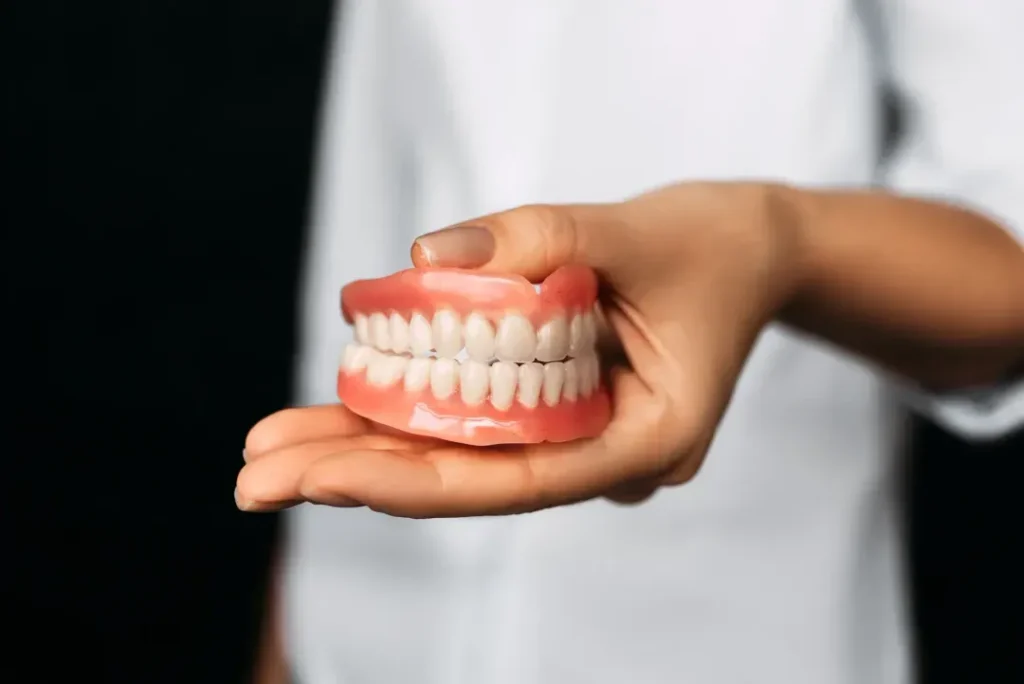
Which Dentures Do We Offer?
Partial dentures are a removable option for patients who still have some natural teeth in the upper or lower arch. The replacement teeth attach to a gum-colored acrylic base, and a thin metal framework clasps gently onto your remaining teeth to keep everything in place. Partials close the gaps left by missing teeth, prevent the neighboring teeth from drifting into those spaces, and bring back the chewing surface you have been missing. For patients weighing a removable partial against a fixed restoration, dental bridges are an alternative we can walk through together during your consultation.
Full arch dentures, also called complete dentures, replace every tooth in the upper or lower jaw. The dentures rest directly on your gums and stay in place through natural suction and, when needed, a small amount of denture adhesive. Modern materials let us craft a full denture that looks lifelike, supports the contours of your face, and gives back the daily comfort of eating and speaking with a complete set of teeth. For patients who already have a full denture that has loosened or worn down over the years, we can also reline or replace the prosthesis to restore the original fit.
All-on-X dentures, often called implant-supported or implant-retained dentures, anchor an entire arch of replacement teeth to four to six small dental implants placed in the jaw. Dr. Hardt or Dr. Cruz performs the implant procedure in our Porterville office, and once the bone has healed around the posts, your custom denture locks securely onto them. This option removes the movement and slipping that some patients notice with traditional dentures and lets you eat your favorite foods, laugh, and speak without worrying about your teeth shifting. For patients replacing every tooth in both arches, our full-mouth dental implants page covers the broader treatment in more detail.
| Compare | Partial Denture | Full Arch Denture | All-on-X Implant Denture |
|---|---|---|---|
| Replaces | A few missing teeth | All teeth in one arch | All teeth in one arch |
| Removable | Yes | Yes | No (fixed in place) |
| Held by | Metal clasps on natural teeth | Suction plus adhesive | 4 to 6 dental implants |
| Best for | Some natural teeth remain | Full tooth loss, no implants | Full tooth loss, healthy jawbone |
| Typical lifespan | 5 to 10 years with relines | 5 to 10 years with relines | 15+ years for the implants |

How Long Do Dentures Last?
With proper care, traditional full and partial dentures typically last five to ten years before they need to be relined, rebased, or replaced. Implant-supported dentures can last considerably longer because the implants themselves are built for the long term and the prosthetic teeth attached to them are easy to refresh. Over time, the bone and gum tissue beneath a removable denture gradually change shape, which is why we recommend regular fit checks during your routine dental visits. When you notice clicking sounds, sore spots, or a denture that has stopped staying put on its own, that is the signal to come in for an adjustment rather than waiting for the problem to grow.
Initial Adjustment
Increased saliva and minor sore spots are normal as your mouth learns the new appliance.
Speech & Chewing Normalize
S and F sounds settle and most foods become comfortable to chew again.
First Fit Check
A routine visit lets us catch small fit changes before they become uncomfortable.
Reline or Replace
Bone and gum changes mean a removable denture is ready for a reline, rebase, or new prosthesis.
Implant Dentures
All-on-X implants are built for the long haul, with prosthetic teeth refreshed as needed.
How to Care for Your Dentures
- Clean your dentures daily using a soft-bristled brush and non-abrasive denture cleaner.
- Remove your dentures at night to allow your gums and tissues to rest.
- Soak your dentures in water or a denture solution overnight.
- Handle your dentures with care to avoid damage or breakage.
Frequently Asked Questions
How long does it take to get used to wearing new dentures?
How long does it take to get used to wearing new dentures?+
Most patients need two to four weeks to fully adapt to a new denture, though it varies person to person. The first days bring more saliva than usual, some sore spots, and a little extra effort with chewing and certain sounds. Soft foods, reading aloud, and easing into more challenging textures help speed the process. If a sore spot keeps coming back in the same place, call our Porterville office for an adjustment rather than waiting it out.
Will dentures change the way I speak?+
For the first few days, dentures may affect words with s and f sounds while your tongue and cheeks adjust to the new shape in your mouth. Reading aloud, practicing tricky words, and slowing down a little while you talk all help. Most patients return to their normal speech patterns within a few weeks. If something still feels off after the adjustment window, we can check the fit and make small modifications.
Should I sleep with my dentures in?+
For traditional partials and full dentures, we recommend taking them out at night so your gums and supporting tissue can rest from the day’s pressure. Sleeping without your denture also lets saliva naturally rinse your mouth and keeps the soft tissue healthier. Patients with All-on-X implant-supported dentures may follow a different routine, and we will walk you through what makes sense for your treatment plan.
What foods should I avoid with dentures?+
Sticky foods like caramel, taffy, and chewing gum can pull at a removable denture, and very hard foods such as nuts, popcorn kernels, and ice can damage the prosthetic teeth. Foods that take real biting force, like whole apples or corn on the cob, are easier when cut into smaller pieces first. Very hot foods can warp denture materials, and seeded foods may get trapped underneath. With a little practice and some small changes to how you prepare meals, most of your favorites stay on the menu.
How often will my dentures need to be relined or replaced?+
Traditional full and partial dentures typically last five to ten years before they need to be relined, rebased, or replaced as the bone and gum tissue underneath gradually change shape. We check the fit during your routine visits and catch small changes before they turn into soreness or loose dentures. Implant-supported dentures last considerably longer because the implants themselves are built for the long haul, and only the prosthetic teeth attached to them get refreshed as needed.
Does insurance cover dentures, and what about CareCredit?+
Many dental insurance plans cover a portion of the cost of partial and full dentures because tooth replacement is considered a medically necessary procedure. Coverage varies plan to plan, so we will check your benefits during your consultation and walk you through what to expect out of pocket. We also offer financing through CareCredit so that the cost of treatment can be spread out into monthly payments that fit your budget.
Will dentures affect my ability to speak clearly?
Will dentures affect my speech? Initially, dentures may cause slight speech changes, particularly with words containing “s” and “f” sounds. This is completely normal and temporary. Your tongue and mouth muscles need time to adapt to the new appliance. Reading aloud, practicing problem words, and speaking slowly at first can help accelerate the adjustment process. Most patients regain normal speech patterns within a few weeks. If speech issues persist beyond the initial adjustment period, we can evaluate the fit and make necessary modifications.
Can I sleep with my dentures in place?
Should I sleep with my dentures in? We recommend removing your dentures at night to allow your gums and supporting tissues to rest and recover from the day’s pressure. This rest period promotes better oral health and helps prevent tissue irritation. Sleeping without dentures also allows your saliva to naturally cleanse your mouth and maintain healthy pH levels. However, some patients with All-on-X implant-supported dentures may have different recommendations based on their specific treatment plan.
What foods should I avoid with traditional dentures?
What foods should I avoid with dentures? Sticky foods like caramel and gum can dislodge dentures, while hard foods such as nuts, popcorn kernels, and ice can damage the denture material or cause discomfort. Foods that require significant biting force, like corn on the cob or whole apples, should be cut into smaller pieces. Very hot foods can warp denture materials. Seeded foods like strawberries may get trapped under dentures. With practice and proper technique, most foods can still be enjoyed with some modifications to preparation and eating methods.
How often do dentures need to be replaced or adjusted?
How do I care for my dentures? Clean your dentures daily using a soft-bristled brush and denture cleaner, not regular toothpaste which can be abrasive. Rinse dentures after eating to remove food particles. When not wearing them, keep dentures moist in water or a denture soaking solution to prevent warping. Handle them carefully over a folded towel or basin of water to prevent damage if dropped. Continue to brush your gums, tongue, and any remaining natural teeth daily, and visit our office regularly for checkups and professional cleanings.